

360 One Asset’s private equity and venture capital arm has raised a ₹1,000 crore fund focused on defence and space investments, backed entirely by domestic limited partners, senior executives at the firm said.
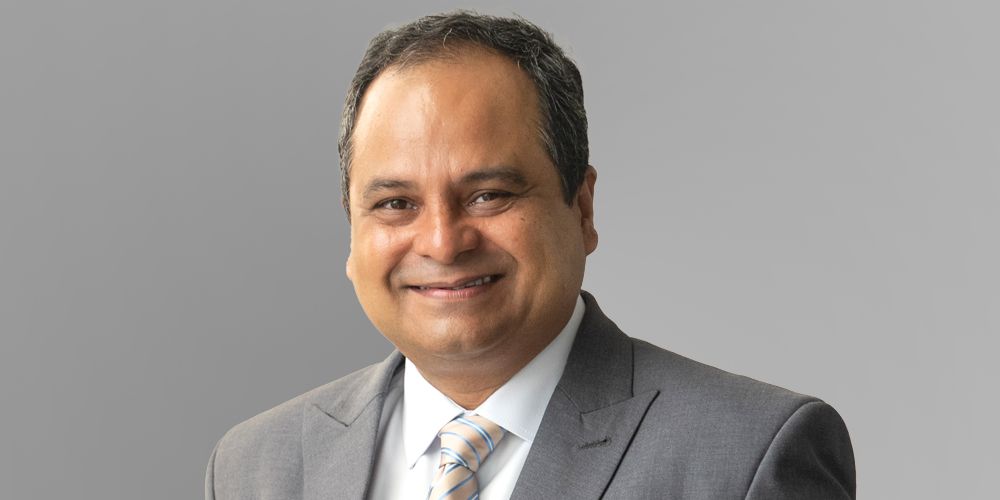
The fund is expected to reach a final close within the next two months and invest in 15-20 companies across the defence and space value chain, said Sameer Nath, chief investment officer and head of private equity and venture capital at 360 One Asset, during a media interaction on 20 January.
Nath said the firm plans to exercise a greenshoe option that could make the corpus larger, potentially making it one of the largest pools of capital dedicated to defence and space in India, a market where funding has historically been episodic and cautious.
Interest in both sectors has picked up in recent years, with dedicated vehicles beginning to emerge. Last year, former Citi executive Ravi Kapoor launched Indusbridge Ventures, a ₹1,000 crore aerospace and defence fund.
Even so, most India-focused defence or aerospace funds remain sub- ₹500 crore. Large generalist venture firms such as Peak XV, Accel and Lightspeed have participated selectively, typically through one-off bets in companies such as Digantara, EtherealX and Pixxel.
The new fund, led by existing partners Sandeep Maheshwari and Abhishek Nag, has already made four investments, including in Digantara, CoreEL Technologies, and Sisir, spanning stages from Series A to pre-IPO and late-stage private equity. A fifth investment is expected to close shortly, the executives said.
The launch comes amid improving policy visibility for the sector. Higher foreign direct investment limits, rising defence capital outlays and a stronger push for indigenization under Make in India and Atmanirbhar Bharat have helped strengthen the investment case.
While the opportunity set has widened, private capital, especially at later stages, has remained limited, Nath said. “Very little VC and PE money has gone in,” he said, adding that both domestic and global private equity are expected to step up participation as companies mature.
Maheshwari, who focuses on late-stage and secondary investments, said the growth outlook for defence and space companies has shifted as order flows become more predictable, revenue visibility improves and export demand begins to supplement domestic procurement. “It was no more about one single order. We began seeing companies getting continuous orders and build-up was continuous and natural.”
Several portfolio companies also have non-defence or civilian applications that can support growth if geopolitical conditions change or procurement cycles slow, executives said.
Exports have emerged as a further tailwind. Maheshwari said India’s defence exports have been rising steadily and are now an explicit policy priority.
India’s defence exports rose from ₹12,815 crore in FY22 to ₹23,622 crore in FY25, translating into an 84% compound annual growth rate over the period, according to data from the Ministry of Defence and the Press Information Bureau.
Maheshwari said this could rise to ₹50,000 crore over the next few years.
Nag said the presence of civilian and export markets is also reshaping how incumbents engage with startups.
Large defence companies are increasingly looking to acquire capabilities rather than build them internally, particularly in areas where startups move faster or operate closer to the technology frontier.
Nag expects defence and space to follow a different trajectory from consumer internet or software startups, with acquisitions playing a significant role alongside public listings. “Defence is likely to be more acquisitive,” he said.
Such outcomes are healthy for the ecosystem and consistent with global defence markets, where mergers and acquisitions are a primary route to scale, he added.
Nath said that while some portfolio companies may eventually list, others are more likely to find strategic or financial buyers in the private market. “We are not putting all our eggs in the IPO basket,” he said.