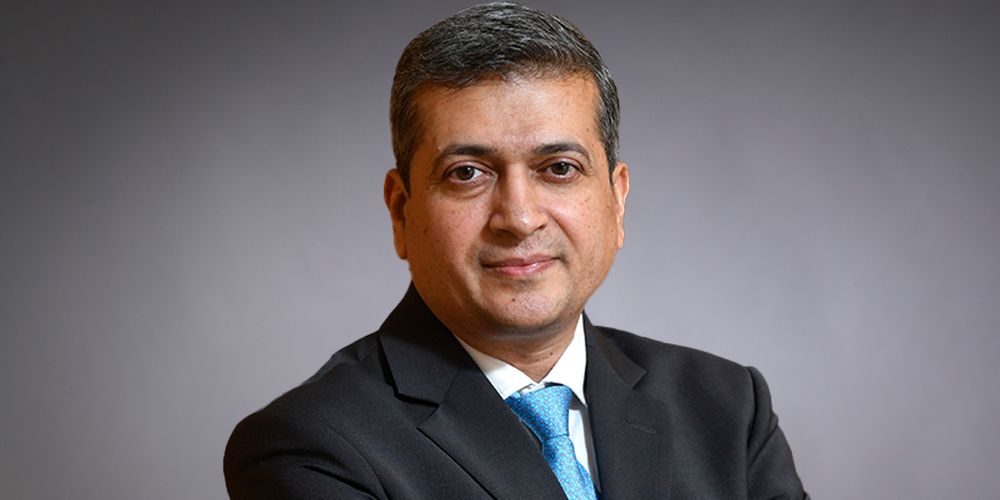

Q1: How did you safeguard AUM and revenue streams in 2024, while also attracting net new assets? What will your strategy be in 2025?
At 360 ONE, safeguarding client portfolios while driving sustainable growth has always been anchored in a disciplined and forward-looking approach. Since our inception in 2008, our Investment Policy Statement (IPS) has provided a robust framework for managing client portfolios, ensuring that every decision aligns with their unique risk tolerance and long-term objectives.
Our disciplined asset allocation process remains the cornerstone of our investment philosophy. Guided by an independent committee comprising global market and asset-class experts, we ensure every opportunity is rigorously evaluated and aligned with long-term client objectives, considering the risk of buying good assets at the wrong valuations. This process reflects our commitment to balancing opportunity with risk management, avoiding the pitfalls of acquiring assets at misaligned valuations.
Every client portfolio is framed with a customised IPS, rooted in a global and market-specific view that seamlessly translates into actionable strategies. This disciplined approach ensures that our clients’ portfolios not only preserve value but also deliver consistent performance, inspiring them to reinvest and grow their wealth with us.
In 2025, we remain steadfast in our focus on delivering superior outcomes in both AUM and advisory services. This will ensure that with the portfolio’s performance, new clients will come in, and existing clients will continue to add new money.
Through a combination of technology, geographic expansion, and next-generation engagement, we are well-positioned to scale new heights while maintaining the trust and confidence of those we serve.
• Technology integration: We aim to deepen our investment in AI and advanced analytics to enhance personalised investment advice and optimise portfolio performance. With technology as an enabler, we will expand our reach, democratising solutions traditionally designed for UHNWIs to cater to the HNWI segment as well. This expansion will allow a broader audience to benefit from our bespoke offerings.
• Geographic diversification: We are broadening our footprint globally and within India, focusing on tier-two cities. This initiative aims to address emerging demand in underserved markets and unlock new opportunities for growth.
• Next-generation engagement: With a significant generational wealth transfer on the horizon, we are designing targeted solutions to engage and capture the aspirations of the next generation. By understanding their evolving preferences, we will ensure our relevance and value across multiple generations.
Q2: How are you advising clients in terms of investment opportunities in 2025?
Equity markets
• Medium-term, growth-oriented clients should maintain some allocation to global equity since the underlying macroeconomic backdrop and earnings momentum remain broadly supportive. However, high valuations suggest that return expectations should be tempered, and we suggest tactically pivoting portfolios to build downside protection and investing in secular themes that continue to offer the potential to create significant long-term value.
• We advise investing in quality companies as a downside protection strategy to mitigate the risk of an economic slowdown. Market-leading companies with top management and strong balance sheets are likely to be far more resilient during economic slowdowns relative to smaller, leveraged, high-growth companies.
• One secular theme to follow is Generative Artificial Intelligence (AI), which is poised to create significant returns and reshape the landscape across various sectors. Identifying companies across all sectors (not just technology) leveraging AI effectively will be critical; conversely, avoiding companies at risk of disruption by AI advancements will be equally important. Advancements in the healthcare and environmental sectors are among the other secular growth opportunities we prefer.
Fixed income
• Inflation and growth normalisation in 2024 have encouraged major central banks to begin normalizing policy, initiating rate cuts in recent months. However, we expect long-term inflation to settle significantly higher than the past decade and remain well above the 2% US Federal Reserve target.
• Although credit spreads are tight, all-in fixed-income yields are at decade highs. We recommend investing in high-quality, investment grade, short- to medium-term fixed income to lock in attractive yields. We believe long-duration bonds face the risks of rising fiscal deficits, risks of inflation shocks from restrictive trade and immigration policies, and deglobalisation trends in the developed world.
• While we like fundamentally strong subordinated bonds for yield pick-up, we would continue to focus on quality to build downside protection.
Commodities and currency
• The US dollar may remain strong in the short-term despite the strong recent rally due to US economic exceptionalism, and a supportive technical picture. However, we recommend building currency diversification and hedges in the portfolio for the medium- to long-term horizon, to guard against the risks from high twin deficits in the US, and a growing desire from other nations to diversify away from the US Dollar.
• Gold remains a core portfolio allocation due to its role as a hedge against inflation, geopolitical risks, and the increasing interest of emerging market central banks in diversifying away from USD-denominated reserves.
Private market investments
• We recommend building a portfolio of well-managed alternative investment funds to gain exposure to global private equity, private credit, real assets, and infrastructure investment opportunities. These investments offer the potential for higher real returns over the medium term and diversification benefits.
• Furthermore, global alternative investments are becoming more accessible to private wealth clients with recent product innovations to reduce the minimum investment size and improve liquidity terms. This trend will continue, as global alternative asset managers increase their focus on private wealth clients.
Q3: What are the priorities for your private bank in attracting and retaining talent?
Attracting and retaining exceptional talent is not just a priority—it is integral to delivering excellence to clients and shareholders. Our approach is built on three fundamental principles:
We believe in a culture where the interests of all stakeholders—employees, clients, and shareholders—are deeply aligned. A cornerstone of this alignment is employee ownership, which creates a shared commitment to driving value. We are a company where owners work, and workers own. By embedding a sense of ownership, we ensure that every decision prioritises long-term client success, delivering sustainable growth for shareholders while empowering employees with a vested interest in the firm’s success.
Our Key Result Areas (KRAs) are designed to focus on fee-based advisory income and building recurring revenue AUM, encouraging our bankers to take a long-term perspective in their client relationships. This approach builds trust, continuity, and a shared commitment to excellence. We are equally focused on ensuring our employees see a clear future with the firm, aligned with our broader growth aspirations.
To attract and retain top talent, we constantly refine and enhance the products, platform, and proposition we offer. These three pillars create a compelling “right to win” for our bankers, ensuring they have the tools, technology, and strategic support needed to excel. When bankers see that our firm equips them with market-leading solutions and a strong value proposition for their clients, they remain confident in their ability to succeed and grow within our organisation.